
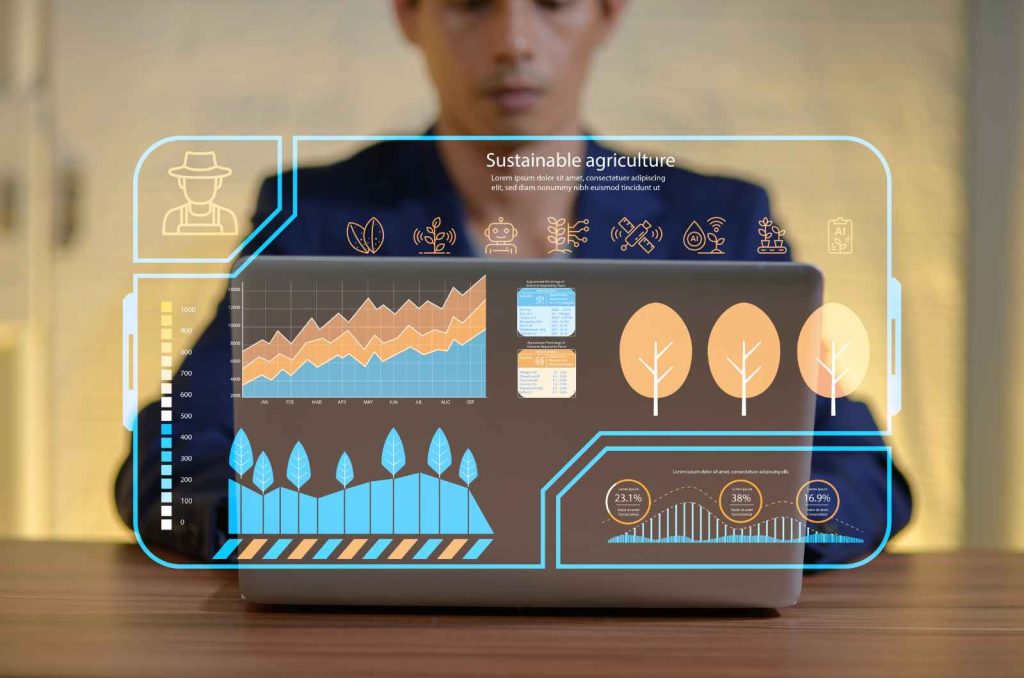
Agricultural research is undergoing one of the most profound technological transformations in its history. The convergence of digital data management, artificial intelligence, remote sensing, and genomics is creating a new paradigm for crop development that is fundamentally different from the research model that dominated the twentieth century. In 2025, the organizations leading this transformation are achieving faster breeding cycles, higher selection accuracy, and better predictions of commercial performance with consequences that extend to global food security and agricultural sustainability.
What Does Digital Transformation Mean for Agricultural Research?
Digital transformation in agricultural research means more than simply replacing paper records with databases. It represents a systemic shift in how scientific knowledge is generated, managed, and applied. At its core, this transformation involves connecting data from diverse sources genomic laboratories, field sensors, satellite imagery, climate models, and historical breeding records into integrated analytical environments that enable evidence-based decisions at every stage of the research pipeline.
The global agricultural technology market reflects the scale of this transformation. According to market analysis from MarketsandMarkets, the global plant breeding market is estimated at USD 8.91 billion in 2025 and is projected to reach USD 13.86 billion by 2030, growing at a CAGR of 9.2%. A significant portion of this growth is driven by the adoption of digital tools and data analytics platforms that increase the efficiency and precision of breeding programs across crop species.
How Are Artificial Intelligence and Machine Learning Being Applied in Crop Breeding?
Artificial intelligence is being applied at multiple points in the crop breeding pipeline, from image analysis for high-throughput phenotyping to predictive models for crossing recommendations. Computer vision systems trained on large datasets of plant images can score disease resistance, canopy architecture, and morphological traits at speeds and scales that are impossible for human observers, enabling phenotypic characterization of populations too large for manual evaluation.
Machine learning models for genomic selection use patterns in genome-wide marker data to predict the performance of untested breeding lines, allowing breeders to prioritize which materials merit expensive phenotypic evaluation and which can be eliminated from the program based on genetic predictions alone. Crossing recommendation algorithms identify optimal parent combinations by analyzing the genetic distance between potential parents, the specific traits of interest, and the historical performance of crosses involving related materials.
What Role Does Remote Sensing Play in Modern Field Research?
Remote sensing technologies including multispectral and hyperspectral cameras mounted on unmanned aerial vehicles, satellite-based vegetation indices, and ground-based sensor arrays are enabling phenotypic characterization of trial plots at spatial and temporal resolutions that were unattainable just a decade ago. Normalized difference vegetation indices, canopy temperature measurements, and three-dimensional structural measurements derived from photogrammetric reconstruction provide objective, reproducible trait data that complements or in some cases replaces traditional manual observation.
The integration of remote sensing data into breeding databases presents both technical and operational challenges. Data volumes are large, processing pipelines require specialist skills, and the biological interpretation of sensor-derived measurements requires validation against traditional phenotypic standards. Resources from NASA's Earthdata platform provide freely accessible satellite imagery and derived products that support field-level environmental characterization, while commercial drone-based sensing services are increasingly available at costs compatible with commercial breeding budgets.
How Are Cloud Platforms Enabling Global Collaboration in Plant Science?
Cloud computing infrastructure is eliminating the geographic barriers to collaboration in plant science that previously constrained the ability of international programs to share and jointly analyze research data. Multi-organization research consortia can now establish shared data environments where breeding data from multiple countries and institutions is aggregated and analyzed using consistent protocols, enabling the kind of large-scale multi-environment analyses that provide the most reliable insights into variety performance and adaptation.
Data governance frameworks for shared research environments must address questions of ownership, access control, and intellectual property protection. Role-based permission systems allow participating organizations to contribute data to a shared environment while controlling which elements are visible to external partners and which remain proprietary. Standardized data exchange formats, including the Breeding API developed by the global plant breeding community, facilitate interoperability between different platforms and institutions.
What Are the Challenges of Implementing Digital Systems in Agricultural Organizations?
Despite the clear benefits of digital transformation, implementing new data management systems in agricultural research organizations presents significant organizational and operational challenges. Legacy data held in heterogeneous formats spreadsheets, proprietary databases, paper records — must be migrated and validated before it can be integrated into new platforms. Staff at all levels, from breeders and field technicians to data managers and analysts, require training on new tools and workflows.
Change management in research organizations requires careful attention to the concerns of scientists who may perceive new systems as administrative burdens rather than scientific enablers. Successful implementations prioritize user experience, provide clear demonstrations of how the new system improves research outcomes, and involve end users in configuration decisions. Vendor support quality, including onboarding assistance and ongoing technical help, is a critical factor in implementation success.
How Is the Seed Industry Specifically Benefiting from Digital Innovation?
The global seed industry is among the agricultural sectors most actively investing in digital transformation, driven by the competitive pressure to bring improved varieties to market faster and the regulatory demands of variety registration programs. Major seed companies have invested substantially in proprietary breeding informatics platforms, while smaller and mid-sized companies are increasingly turning to commercial software solutions that provide enterprise-grade capabilities without the cost of custom development.
Digital transformation enables seed companies to compress the time from initial cross to commercial release by improving the accuracy and speed of selection decisions at every stage of the breeding pipeline. Programs that previously required 10 to 12 years to bring a new variety to market are achieving timelines of 7 to 8 years through the combination of genomic selection, optimized crossing strategies, and year-round breeding using counter-season nurseries. According to the International Seed Federation, investment in plant breeding globally is estimated to exceed USD 10 billion annually, with a substantial and growing share directed toward digital and genomic technologies.
How Does Phenome Networks Contribute to Agricultural Digital Transformation?
As a purpose-built software provider for the plant breeding and variety testing sector, Phenome Networks plays a direct role in the digital transformation of agricultural research organizations worldwide. The PhenomeOne platform provides seed companies, research institutions, and variety testing organizations with the data management, analytical, and decision-support infrastructure needed to operate at the frontier of modern plant science. By consolidating germplasm records, field trial data, genomic analyses, inventory management, and decision-support tools in a single enterprise-grade system, PhenomeOne enables the kind of integrated, data-driven research operations that define leading breeding programs in 2025. The platform's modular design and SaaS delivery model make these capabilities accessible to organizations across the spectrum of size and technical sophistication.
Data as the Engine of Agricultural Innovation
The digital transformation of agricultural research is not a future trend it is a present reality that is reshaping competitive dynamics across the global seed and crop protection industries. Organizations that have built the data infrastructure, analytical capabilities, and organizational culture needed to operate as genuinely data-driven research enterprises are achieving measurable advantages in breeding efficiency, variety performance, and time-to-market. The investment required to achieve this transformation is substantial, but the alternative continuing to operate with fragmented data, manual processes, and limited analytical capability carries an escalating opportunity cost as competitors accelerate their digitization programs and the pace of genetic gain widens between leading and lagging programs.
More Online Resources: phenome-networks